- Polish manufacturer of car windshield wipers
- +48 58 600 6126
- ul. Topolowa 1A, 84-207 Łężyce, Polska
- biuro@oximo.pl


- Distributors
-
About
-
Products
- Find wipers
- Usage guide
- Blog
- Cooperation
- Download
- B2B order portal
- Contact


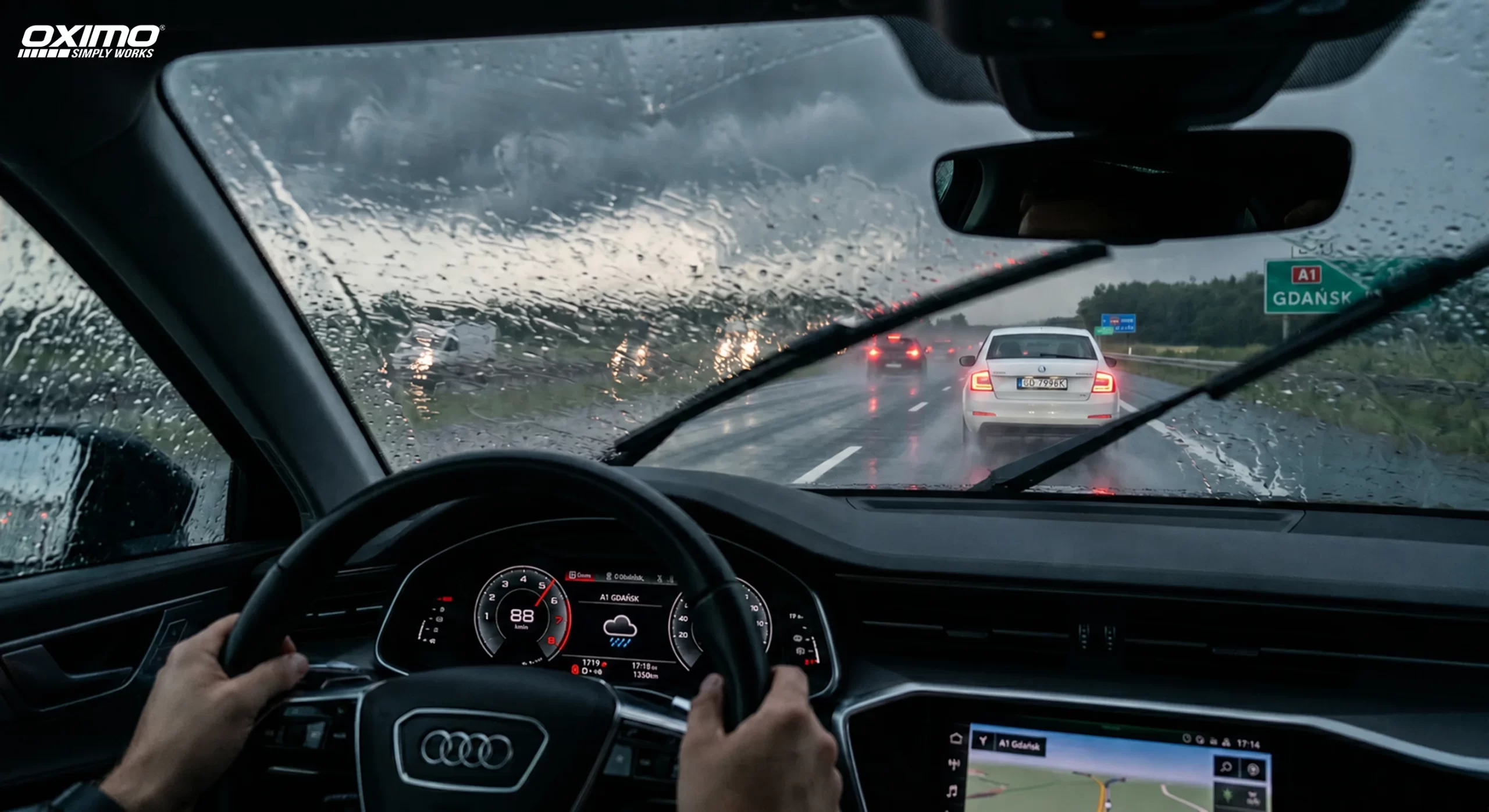
Looking at global meteorological statistics, the rainfall distribution in many temperate climates is clear-cut. While autumn might have more overall rainy days, it’s actually the summer months that frequently record the highest total precipitation. Historically and statistically, mid-summer often brings the most severe downpours.
Why does this happen? Autumn rain is usually large-scale precipitation—steady, prolonged, but of low intensity (the classic drizzle). In summer, atmospheric mechanics are entirely different. High temperatures cause intense evaporation, leading to the formation of massive storm clouds (Cumulonimbus). The result is localized, extremely intense downpours.
In meteorological jargon, these phenomena are often referred to as flash floods or torrential rainfall. These are short-lived but extremely heavy convective rains, during which an entire month’s worth of water can fall on a single square meter in just a few dozen minutes.
Furthermore, climate change is making these violent events increasingly frequent across the globe. For every 1°C of atmospheric warming, the air can hold about 7% more water vapor. For drivers, this means one thing: we will spend less time driving in a light drizzle and more time facing sudden, extreme weather anomalies.
Imagine a typical holiday road trip on the highway. The speedometer reads 120 km/h, the sun is shining, and suddenly, as you drive under a dark cloud, you hit a literal wall of water. Experiencing a cloudburst while driving is one of the most dangerous moments a driver can face. Two critical phenomena occur instantly:
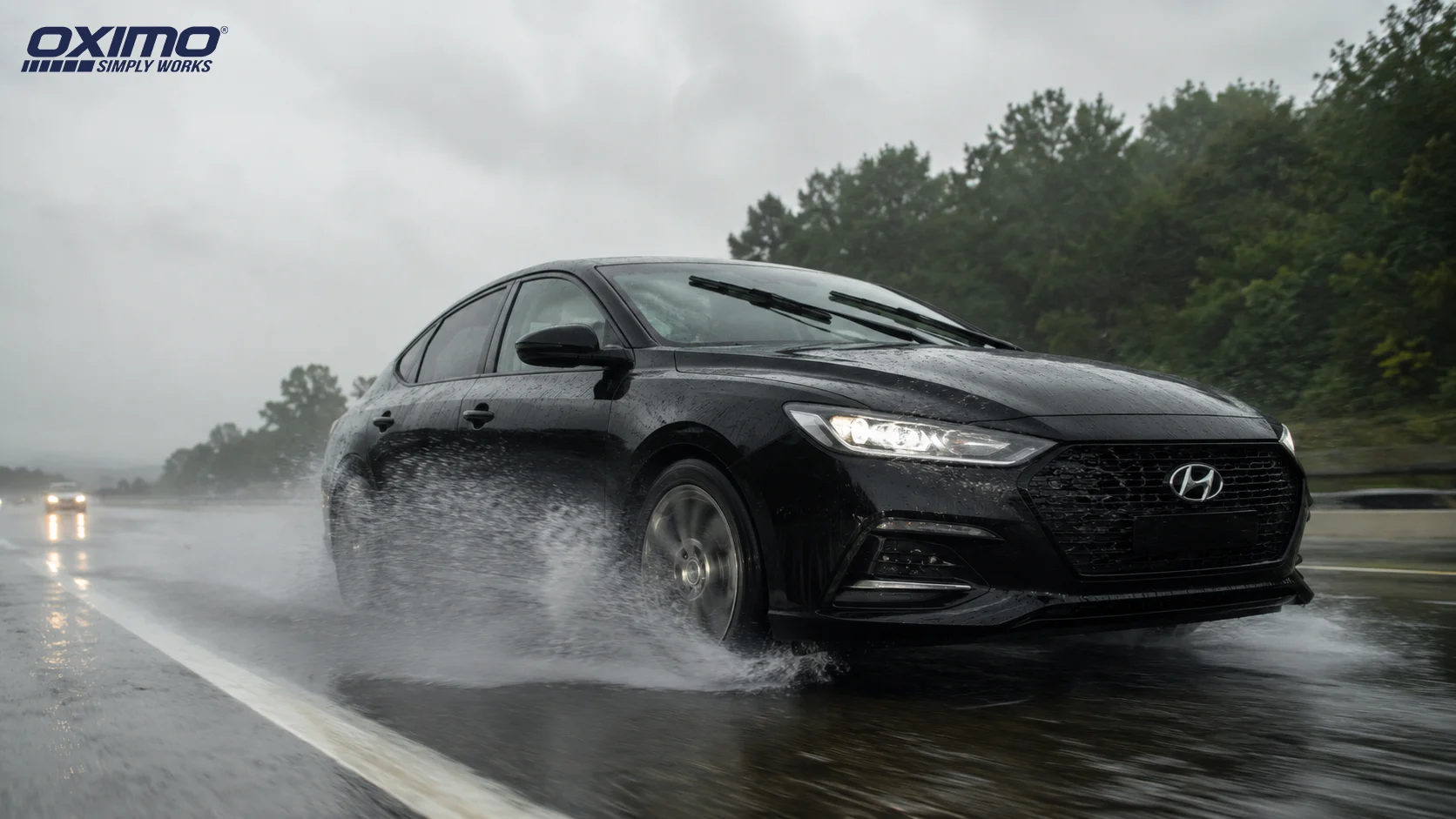
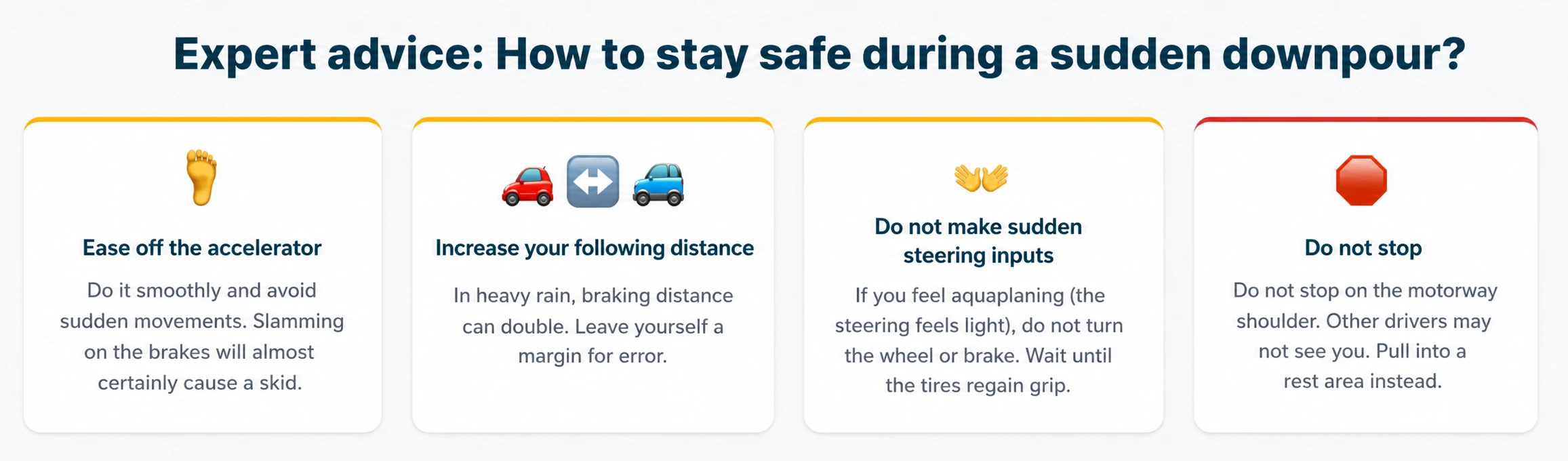
Safe driving in the rain, especially extreme rain, requires nerves of steel, a basic understanding of physics, and… a perfectly prepared car. If you drive into a torrential downpour zone, follow these rules:
In the critical moment of a torrential downpour, your safety depends on one often-underappreciated component: the windshield wiper system. When water floods your windshield at a rate of several liters per minute, your wipers have to work in overdrive.
If the blades leave streaks, skip across the glass, or fail to keep up with the water, you are essentially driving blind. At highway speeds, aerodynamics also become crucial. The wind can lift low-quality blades right off the glass.
That’s why, when choosing car wipers, you should opt for products designed with extreme conditions in mind. Renowned manufacturers, such as the OXIMO brand, design frameless wipers with an integrated aerodynamic spoiler. This ensures the airflow presses the blade firmly against the windshield, guaranteeing an even sweep of water even at highway speeds.
The chemistry and physics of the material itself are equally important. OXIMO blades utilize dedicated, advanced rubber compounds (often enriched with silicone and Teflon coatings). This prevents the material from degrading in the summer heat and ensures smooth, silent operation when a storm suddenly strikes. A perfectly matched blade curvature to the windshield’s profile isn’t a luxury—it’s a guarantee that fractions of a second after hitting a “wall of rain,” you will regain full road visibility.
The changing climate and the increasing frequency of torrential rain require drivers worldwide to adapt. Aside from taking our foot off the gas and keeping a cool head behind the wheel, we must remember the technical basics.
Even the best safety systems in a modern car won’t work if the driver doesn’t see the danger in time. That’s why regular wiper replacement is crucial—it’s usually recommended to do this at least once a year, for example, before the summer travel season. However, common sense should prevail: if your blades are still working flawlessly, quietly clearing water, and providing excellent visibility, you don’t need to force a replacement. Monitor their condition regularly and simply don’t wait for a storm to catch you off guard. Ensure perfect visibility with OXIMO and travel safely, no matter the weather.